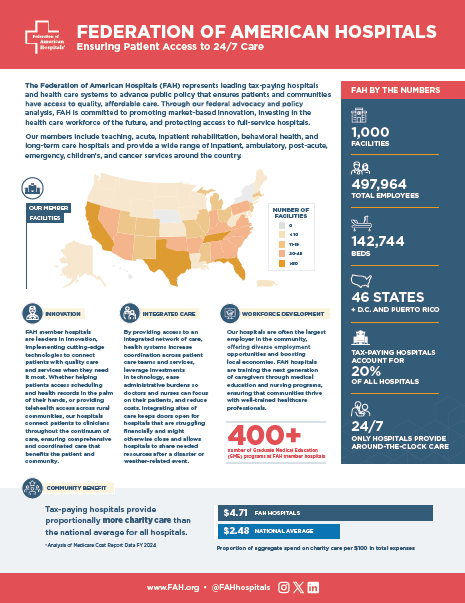
The Federation of American Hospitals (FAH) is the national representative of more than 1,000 tax-paying community hospitals and health systems, accounting for nearly 20% of U.S. hospitals. Through our federal advocacy and policy analysis, FAH is committed to promoting market-based innovation; investing in local economies, creating jobs, and growing the health care workforce of the future; and protecting access to full-service hospitals.
OUR MISSION
The Federation of American Hospitals represents the country’s leading tax-paying hospitals and health care systems to advance public policy, ensuring patients & communities have access to high-quality & affordable 24/7 care.
WHAT MAKES FAH MEMBERS STAND APART?
- SERVING PATIENTS: Our members deliver high-quality care nationwide, across both urban and rural communities, disproportionately serving high-need areas with high rates of uninsured patients. As tax-paying hospitals, our members provide more charity care than the national average and invest directly in their communities through state and local taxes.
- CREATING JOBS & SUPPORTING COMMUNITIES: Our hospitals are often the largest employer in the community, accounting for half a million jobs nationwide. FAH hospitals are also training the next generation of clinicians through medical education and nursing programs, ensuring that communities thrive with well-trained healthcare professionals by operating over 120 Graduate Medical Education (GME) programs.
- TRANSPARENT AND ACCOUNTABLE: Tax-paying hospitals are subject to rigorous disclosure and reporting requirements, giving policymakers a clearer view of the value they deliver to patients and communities. Our members do not participate in the 340B drug discount program, which means they operate without special drug discounts that are difficult for policymakers to track.
- INNOVATIVE: FAH member hospitals are leaders in innovation, implementing cutting-edge technologies to connect patients with quality care and services when they need it most. Whether helping patients access scheduling and health records in the palm of their hands, or providing telehealth access across rural communities, our hospitals connect patients to clinicians throughout the continuum of care, ensuring comprehensive and coordinated care that benefits the patient and community.
- INTEGRATED: By providing access to an integrated network of care, health systems increase coordination across patient care teams and services, leverage investments in technology, ease administrative burdens so doctors and nurses can focus on their patients and reduce costs. Integrating sites of care keeps doors open for hospitals that are struggling financially and might otherwise close and allows hospitals to share needed resources after a disaster or weather-related event.